

Nairobi County Govt Will not Compensate Flood Victims on National Roads, Sakaja Declares

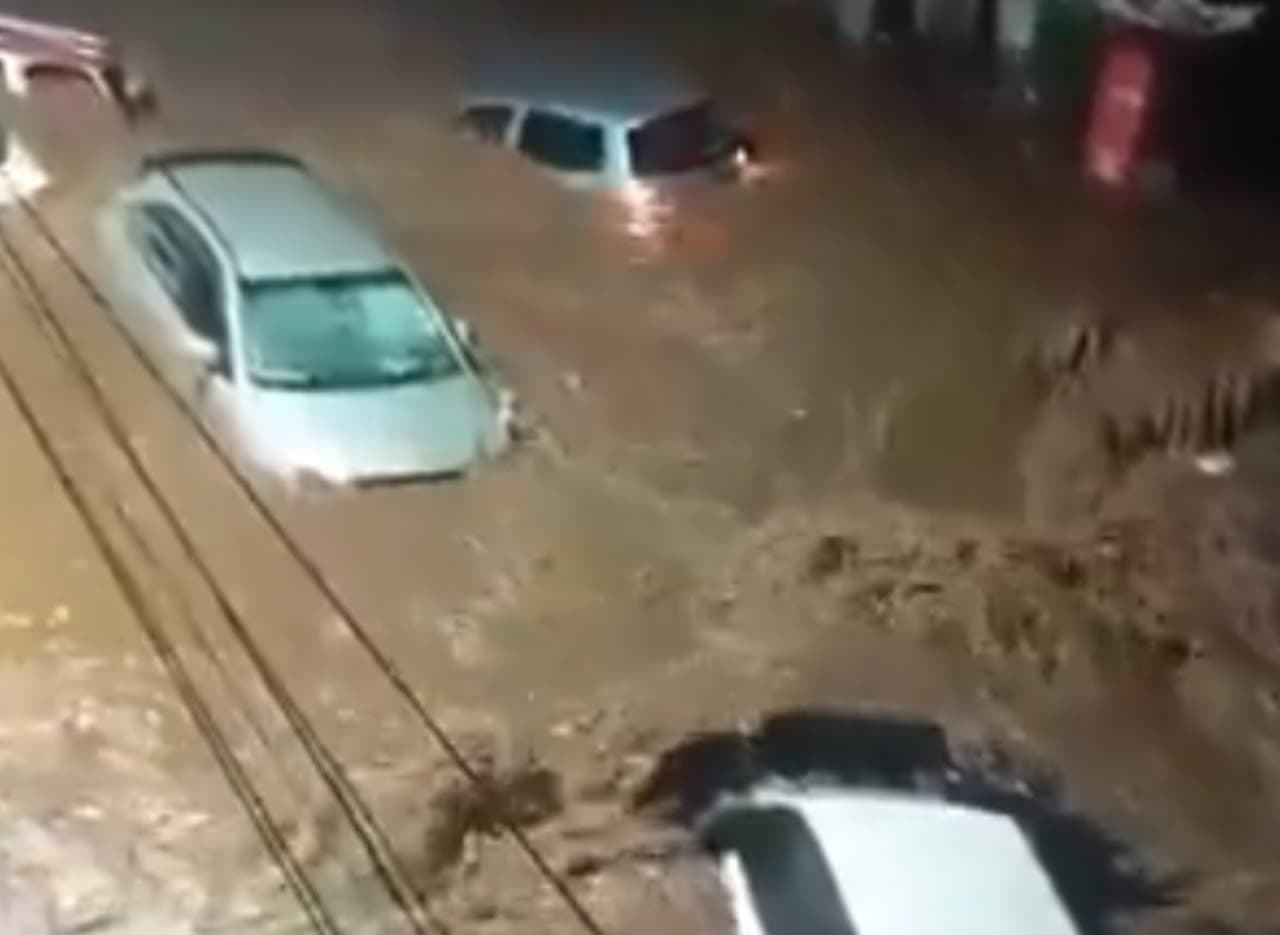
Nairobi Governor Johnson Sakaja has said the county government can't compensate flood victims on national roads
He said that the county government cannot be held responsible for damages caused by recent floods on roads that fall under national government agencies.
The governor explained that several roads affected by the heavy rains are managed by the Kenya National Highways Authority (KeNHA) and the Kenya Urban Roads Authority (KURA), both of which operate under the Ministry of Roads.
Speaking after the floods that hit parts of the city following heavy rains on Friday, resulting in deaths of over 25 people, Sakaja said different government institutions have specific responsibilities. He added that this makes it difficult for the county to intervene in areas outside its mandate.
“That’s a discussion to be held; there is none as we speak because there are different entities with different responsibilities,” Sakaja said when asked about the possibility of compensating victims affected by the floods.
He argued that it would be unreasonable for the county government to compensate residents for damages that occurred on infrastructure managed by other authorities.
To illustrate his point, Sakaja compared the situation to an incident involving the Nairobi Expressway, which is also managed outside the county’s jurisdiction.
“If your car got messed on the expressway, why would the county compensate you? It is not the county’s road, the county has no budget for that road,” he said.
According to the governor, the county government cannot justify allocating public funds to compensate for damages occurring on roads that are managed and funded by national agencies.
“All the places that had those problems are not under the purview of the county,” he said.
Sakaja further stated that each agency is allocated its own budget and has contractors responsible for managing infrastructure projects within their mandate.
“I would not take responsibility for something that is not my function; it is not under my purview. Somebody has a budget for it, somebody has contractors for it, how then would I justify the county compensating for that?” he posed.
Despite this, the governor said the county government is still willing to assist in emergency situations where possible, particularly through disaster response resources.
However, he emphasised that such support is limited by the financial resources available to the county.
“Where we can intervene and help using disaster resources, it is just the limitation. If it were up to me and there were no limitations on the resources, I would say yes, let’s compensate everybody, but where is the money?” he said.
Sakaja also noted that the county government has occasionally stepped in to help resolve infrastructure challenges, even on roads that do not fall under its authority.
He cited drainage works along Ojijo Road and Kipande Road as an example, where the county intervened to address drainage capacity issues.
“Some of the drainage needs to be expanded. I will give you an example of Ojijo Road and Kipande from 1.2 metres to 0.6. I had to intervene to get it sorted, but it’s not my road,” Sakaja said.
He added that the responsibility for such works lies with the Kenya National Highways Authority, but the county sometimes steps in to ensure urgent problems are addressed.
“It had to be done by KeNHA. And you see people don’t want to understand that,” Sakaja said.
The governor’s remarks come amid growing public concern over Nairobi’s infrastructure following the floods, which exposed weaknesses in drainage systems and sparked debate over the roles of different government agencies in managing the city’s roads and flood response.