

Nairobi on High Alert: Governor Sakaja’s "Green Army" Battles Floods as Riverbank Demolitions Begin

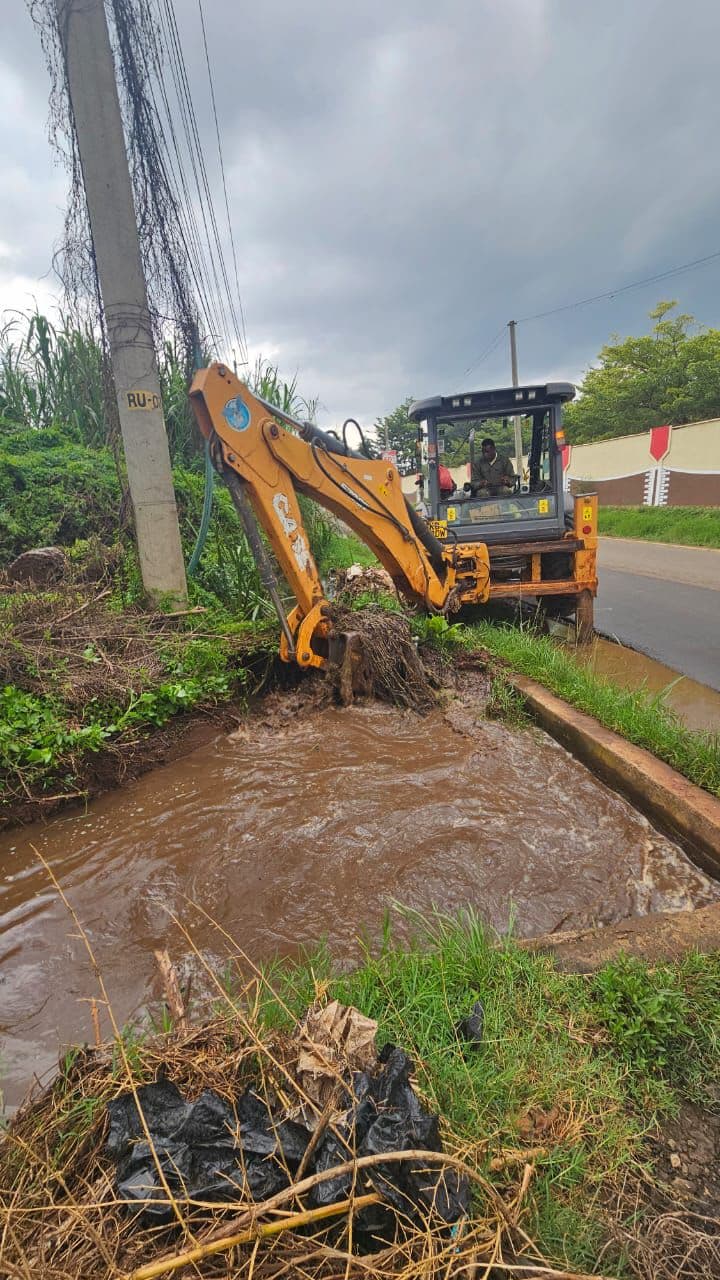
NAIROBI, Kenya – The skyline of Nairobi may be grey with heavy rains, but the streets are buzzing with the sound of heavy machinery and the tireless work of the "Green Army."
On Friday, March 20, Governor Sakaja Johnson’s ambitious flood mitigation plan shifted into high gear, transforming the city into a massive construction and cleanup zone.
Following a directive issued just 24 hours prior, the Nairobi City County government has launched a multi-agency offensive to reclaim the city’s waterways, unclog its arteries, and protect residents from the devastating impact of the ongoing rainy season.
A City Under Restoration From the suburbs of Roysambu to the bustling streets of Kibra, the scale of the operation is visible. In Roysambu Ward, teams were seen desilting deep channels at Oak Place and behind Kongoni Primary School, ensuring that runoff has a clear path to follow.
The momentum carried into Kibra Sub-county, where a coordinated team tackled the KMTC area along Ngong Road and Joseph Kang’ethe Road. Residents watched as tons of silt and waste—the primary culprits behind flash flooding—were hauled away.
However, the mission hasn't been without its hurdles. Along Muhoho Avenue in Nairobi West, operations hit a temporary snag due to a mechanical breakdown, though county officials assured the public that repairs are being fast-tracked to resume work.
Reclaiming the Rivers The most dramatic scenes are unfolding along the city's riparian lands.
At the T-Mall Bridge, a notorious flooding hotspot, the Nairobi Rivers Commission joined forces with Lang’ata enforcement officers in a "Rapid Results Initiative" (RRI) to clear the Nairobi River.
This follows Governor Sakaja’s stern warning on Thursday: illegal structures on riverbanks must go. "This is a coordinated, multi-agency effort that will not stop until our drainage systems are fully restored and our river corridors reclaimed," Governor Sakaja stated during an inspection in Westlands. "We have seen rivers reduced to narrow culverts by illegal developments. That ends now."
"No Exceptions" The Governor’s 48-hour flood response plan is more than just a cleanup; it is a enforcement mission. Heavy machinery has already begun tearing down encroachments that have long obstructed the natural flow of water.
In Kayole Central Ward, the exercise took a holistic approach. Beyond just unclogging drains, the "Green Army" conducted a massive sweep of Mugendi and Diwopa/Bondeni roads, combining garbage collection with drainage restoration to ensure that today’s clean-up isn't undone by tomorrow's litter.
Hotspots Under Watch City Hall has officially identified several "high-risk" zones that will remain under constant surveillance and active intervention: Kirichwa River Basin Westlands (Westgate area) The Central Business District (CBD) Downstream sections of the Nairobi River
As the rains continue, the Governor has called for a collective effort, reminding developers and residents alike that the city's safety is a shared responsibility. "We must all take responsibility—government, developers, and residents—to ensure we do not return to the same crisis," he urged.
With weekly progress reports now mandated, Nairobeans are hopeful that this aggressive stance will finally turn the tide against the perennial menace of urban flooding.