

Women Carry Economies on Their Shoulders While Facing Life-Long Financial Risk

By Stacy Gachanja
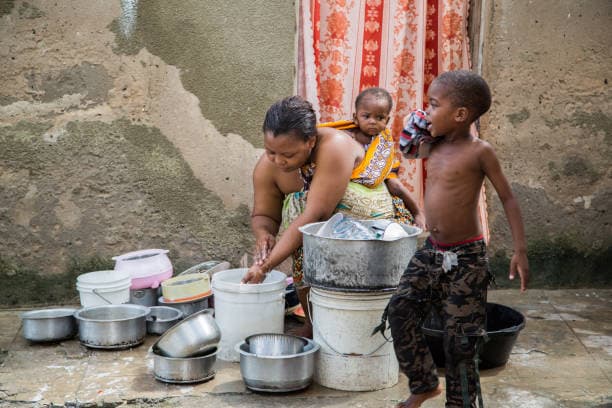
Across Kenyan households, women perform the bulk of unpaid care and domestic work. Time use surveys by the Kenya National Bureau of Statistics (KNBS) indicate that women spend about 4 hours 30 minutes daily on unpaid care and domestic work, roughly five times more than men, who spend about 54 minutes. This gap begins in childhood and widens through the lifecycle, with girls aged 15‑17 spending around three times the time boys spend on similar tasks.
Unpaid labour includes caring for children, the elderly and those with chronic illnesses as well as managing household needs such as cooking, cleaning, coordinating daily family needs, amongst others. This work is essential to the well‑being of families and the functioning of economies but it is rarely accounted for in traditional economic statistics or social protection systems. When unpaid care work is quantified, KNBS valuation places each Kenyan woman’s unpaid work at about KSh118,845 per year, collectively amounting to nearly KSh2 trillion, equivalent to roughly 23 per cent of the country’s GDP. Such estimates illustrate the hidden yet enormous contribution women make to national productivity.
The gendered distribution of care responsibilities carries material consequences, constraining many women’s ability to participate fully in paid work or to pursue income‑generating opportunities. Time poverty, the result of long hours spent on unpaid tasks, also limits women’s educational and professional advancement and often relegates them to precarious jobs with low wages and little to no social protection. Advocacy think‑tank Human Rights Watch notes that around 88 per cent of Kenyan women work in the informal sector, where access to financial services and retirement benefits are limited and job security tenuous.
In addition to lower earnings and underrepresentation in formal employment, many women lack financial literacy and control over financial decision‑making. Surveys indicate that a large proportion of women in Kenya do not participate meaningfully in household financial choices, limiting their autonomy when faced with economic shocks.
These dynamics intersect with health risks in ways that compound women’s vulnerabilities. Caregiving is physically demanding and emotionally taxing, and it often goes hand in hand with exposure to poor working conditions. During public health emergencies such as the Covid‑19 pandemic, for instance, the burden on women intensifies as they take on more care responsibilities at home and in the community, often at the expense of their own health. Research from the Covid period shows that women were less likely to access healthcare services for themselves, further deepening health disparities.
The long‑term implications of these patterns extend into retirement, where, as a consequence of limited to no participation in formal employment, many women must contend with uncertainty. In comparison, men are far more likely to accumulate wealth and assets over their lifetimes. Research from probate records shows that men are significantly more likely than women to leave estates at death, reflecting broader inequalities in asset ownership and financial security.
In the absence of intentional planning and policy interventions, women’s disproportionate exposure to financial volatility and lack of retirement preparedness will continue to undermine broader development goals. This makes advisory planning a critical component of women inclusion as it enhances their autonomy and enables strategic decision‑making that reflects both immediate needs and future aspirations. However, for such planning to be truly effective, it must be grounded in an understanding of the structural barriers that women face. It must recognise the economic value of unpaid care work and advocate for social protection systems that include caregivers in formal safety nets. This requires promoting financial services tailored to women’s realities and incentivising formal employment opportunities that offer retirement benefits and social security coverage. At the policy level, national care frameworks that redistribute care responsibilities and invest in care infrastructure can shift the burden off individual women and create the conditions for more equitable economic participation.
The imperative of gender‑responsive advisory planning extends beyond the individual to the collective, because when women are economically secure, families are more stable and communities thrive. Conversely, when women bear disproportionate risk without the tools to manage it, entire societies forfeit the potential contributions of half their population. As we continue to celebrate International Women’s Month, the spotlight remains on systemic change that supports women as economic agents by equipping them with resources to thrive presently and in the future.
(The writer is the General Manager - Head of Human Resource at Minet Kenya)